

Insights
5
min read
The Price of This Pandemic: COVID-19 Financial Fallout and how Healthcare Finance Leaders can repare
While the U.S. has not yet reached thepeakof its COVID-19 medical crisis, hospitals and other healthcare providers are already reeling from the negati...
Written by
Claire Bevan
Published on
April 8, 2020
Share


Subscribe to our newsletter
Stay in the loop in our resources and insights
Thanks for your message!
We will reach back to you as soon as possible.
While the U.S. has not yet reached the peak of its COVID-19 medical crisis, hospitals and other healthcare providers are already reeling from the negative financial impact of the pandemic.
The loss of revenue from elective surgeries and non-acute visits alongside a surge in emergency staffing, supply and capital expenses is straining the resources of even the most financially sound hospitals. Major health systems have already announced staff furloughs and layoffs to offset the anticipated decline in operating revenue.
As healthcare finance leaders brace for this clinical and financial crisis, what should they expect and how can they prepare? Cedar recently hosted a special briefing on this topic with Dr. David Shulkin, former Secretary of Veterans Affairs and longtime hospital executive.
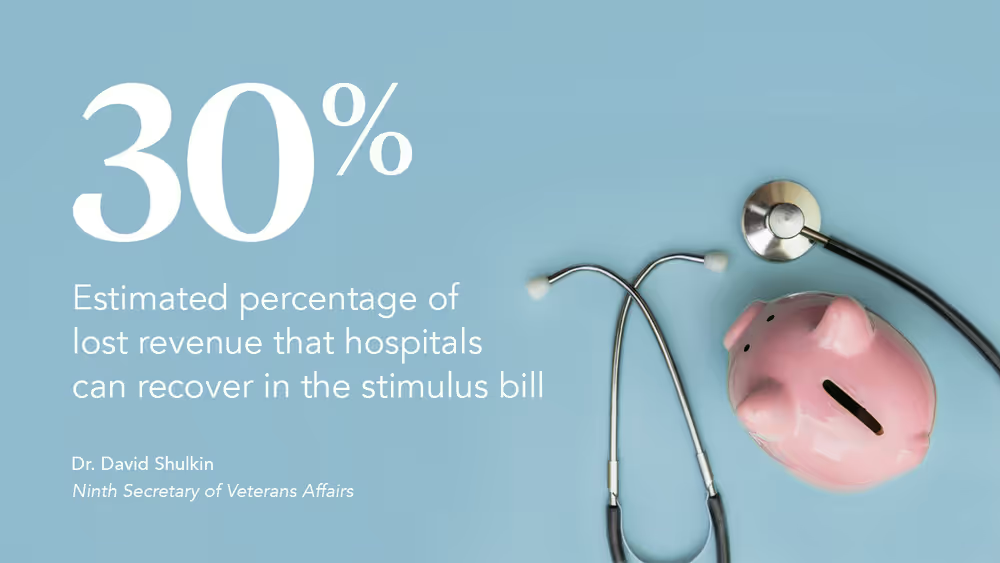
Click here to access the full briefing now and hear why Dr. Shulkin estimates that hospitals may only make back 30% of lost revenue in stimulus funding.
A few key insights Dr. Shulkin covered in the March 31, 2020 briefing:

Insight: Hospitals are losing 50% of revenue but some relief is on the way
Most hospitals are currently seeing revenue reductions of up to 50% associated with the decline in elective procedures, ancillary services and ambulatory visits. At the same time, they are encountering declines in non-operating income and a surge in staffing and supply costs. The good news? According to Dr. Shulkin, the stimulus bill can be expected to bring at least some relief to most hospitals. Of the $2.2 trillion stimulus bill, $100 billion is allocated for hospital relief specifically. To take full advantage of grants from the CARES Act, as well as available FEMA grants and Medicare payments, providers should take care to ensure proper coding for all COVID-19 cases and rigorously document all expenses incurred. To hear more on this topic, tune in to minute 35:30 of the special briefing.
Insight: Telehealth isn’t replacing speciality visits (yet)
In recent weeks, many providers have looked to telehealth to make up the gap on lost revenue from in-person speciality care and non-urgent visits; CMS has helped facilitate this shift by waiving telehealth restrictions and reimbursing virtual and in-person visits at the same rates. While health systems with a strong telehealth infrastructure in place, such as the Cleveland Clinic, have seen a massive spike in virtual visits, telehealth is not yet serving as a direct replacement for speciality care visits. Currently, 75% of telehealth visits are COVID-19 related and tend to act as a stand-in for urgent care. But in Dr. Shulkin’s words, it will be hard to “put the genie back in the bottle” on telemedicine after the pandemic especially as more states enact parity laws for telemedicine, so this pattern may well shift with time. To learn more about telehealth implications, click to 41:27 here.
Insight: Empathetically engaging with patients on their OOP costs will improve collection rates and patient loyalty
In addition to physician harm, previous pandemics have all caused widespread anxiety, depression and behavioral health issues, said Dr. Shulkin. In fact, in the years following prior pandemics, up to 30% of the population experienced symptoms of post-traumatic stress following the crisis. “Healthcare providers need to be very sensitive to the impact this [crisis] is having on people’s lives,” stated Dr. Shulkin. As economic disruption reduces access to employer-sponsored health insurance and steady income, providers should work closely with patients on developing flexible payment plans and resolution options to help patients get through a difficult time. Learn more about this issue at minute 45:17 of the briefing. “We are all in this together,” closed Dr. Shulkin. “And we are all going to have to work to get out of this together and working closely with patients is going to be more important than ever.”
To access the entire COVID-19 special briefing on hospital and financial readiness, click here.
See related blog posts


Built for patients. Powered by intelligence. Proven in performance.
Product visuals and descriptions may be in development and are subject to change. Certain functionalities may require third-party integrations or service-specific terms or fees. Patients served, patient interactions, and payments processes represent Cedar cumulative metrics since 2017. Cedar Support, Cedar Kora, and Cedar Cover metrics reference data from pilots in 2024 and 2025. Cedar Pay metrics reference data from 2023 to 2026, including weighted averages. All performance metrics, as well as testimonials from Cedar clients, are provided solely for illustrative purposes, and are not a guarantee of future results.
