

Insights
5
min read
No-Show Rates Are Changing. Here’s How to Address Them in 2022
The dreaded no-show is the ultimate health system opportunity cost because it wastes time, energy and resources. Historically, no-shows have been cost...
Written by
Claire Bevan
Published on
March 4, 2022
Share


Subscribe to our newsletter
Stay in the loop in our resources and insights
Thanks for your message!
We will reach back to you as soon as possible.
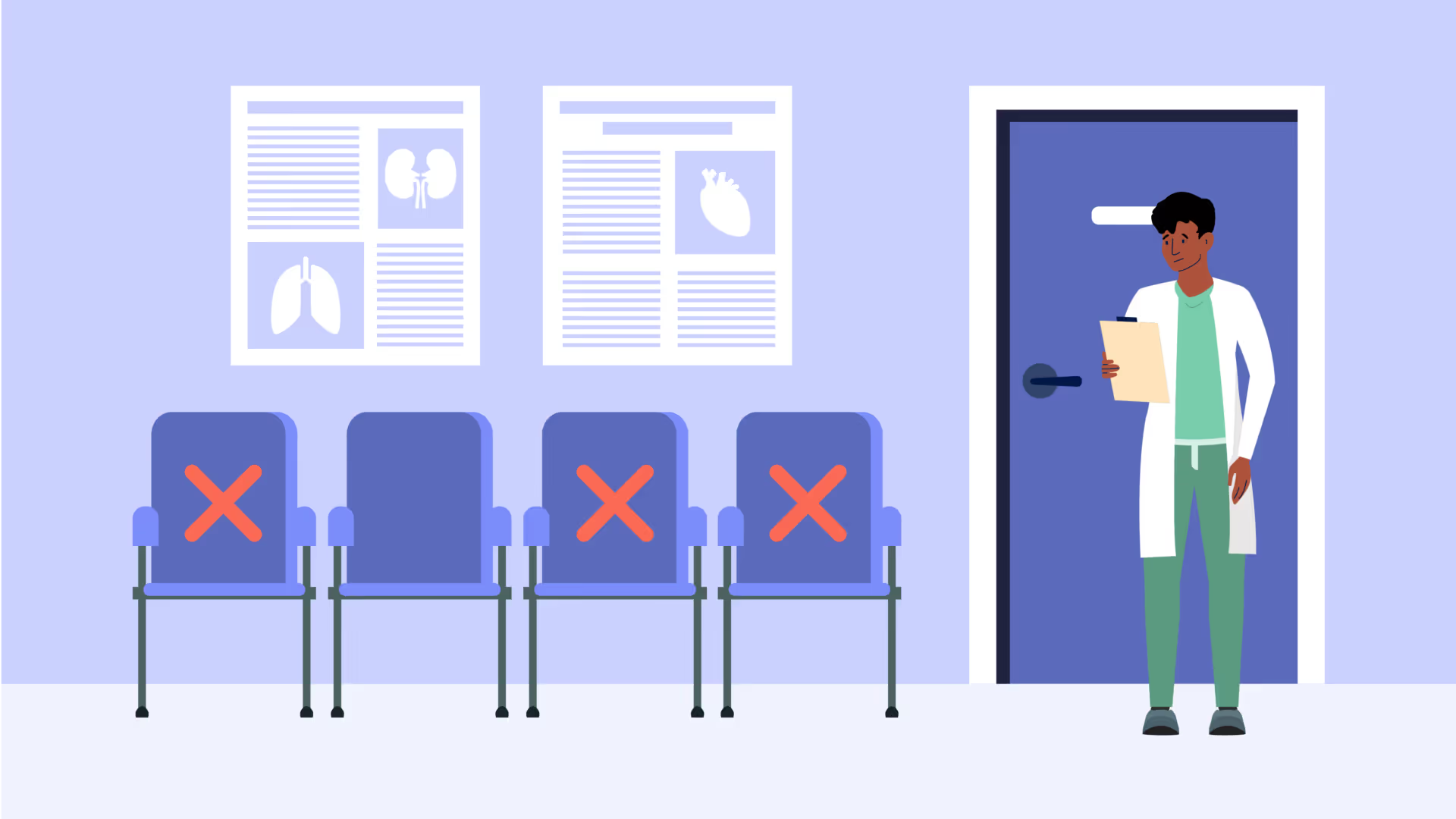
The dreaded no-show is the ultimate health system opportunity cost because it wastes time, energy and resources. Historically, no-shows have been costly for health systems; one stat indicates about one in five patients won’t show up, costing the healthcare industry more than $150B a year.
To make matters worse, no-shows are also correlated with diminished healthcare outcomes among patient groups that need care the most. In 2022, it’s all the more important for providers to regain patient loyalty and lost revenue given the significant drop in non-essential procedures over the last couple years.
That said, there are some promising trends on the horizon. With the rise in telehealth, rates may be slowing. According to a recent study of a primary and specialty care clinic published in Telemedicine and e-Health, the telehealth no-show rate was 7.5% compared to 36.1% for in-office appointments. Prior to the pandemic, the average no-show rate was 29.8%.
While positive signals exist, many procedures aren’t eligible for telehealth, and no-shows still present a tough challenge. Fortunately, there are options to close the gap further—and to start, it’s important that we understand the main reasons for no-shows.
Why do patients miss appointments?
There are several commonly cited studies on the reasons for no-shows. While they differ in sample size, methodology and some conclusions, they suggest two reasons account for close to half of no-shows:
- Forgetfulness
- Scheduling logistics (e.g. double booking/conflicts, appointment didn’t show on calendar etc.)
These no-shows are potentially preventable if health systems take the right action. (Factors like transportation, costs and fear account for the remaining no-shows and are harder for providers to influence.)
One way to make progress is reminding patients. The question is how? There isn’t a one-size-fits-all approach to communicating with every patient in a way that maximizes engagement. That being said, it’s clear that automated capabilities are crucial for an optimal reminder strategy.
While still nascent, technologies that use artificial intelligence, machine learning and data science offer promising capabilities to further close the gap by identifying patients most likely to no-show and communicating in a way that prompts them to take action.

The problem is, native EHR capabilities don’t enable tailored outreach to individual patients based on preferred channels. Every patient is different, so it helps to be able to customize paper, phone, email and text communications. And for paper and phone channels, decision-makers have to account for additional labor and postage costs.
In essence, by implementing an automated, omnichannel strategy configured to patient preferences, health system leadership can find a happy medium that leads to fewer no-shows.
Maximizing incentives and reducing no-show rates
After establishing a digital reminder strategy, the second step is aligning incentives for people to show up. Many patients are willing and able to pay for treatment in advance. If they’ve already paid, they have an incentive to show up for services.
Going hand in hand with advance payment is price. Providers are required to comply with the No Surprises Act, but minimal compliance doesn’t effectively engage patients with clear estimates. While any patient who books an appointment obviously wants to receive care, those concerned about price may be afraid of payment obligations, raising the risk of fear-based no-shows. Clear estimates can cut across those concerns and incentivize attendance by assuring patients there are viable options for financing and payment.
A holistic approach to making appointments
A thoughtful pre-visit communications strategy helps elevate the entire care experience. As consumer expectations continue to evolve at lightspeed, patient-centric pre-visit experiences will become the norm.
For providers, optimizing this step in the patient journey should lead to increased and accelerated payments, improved patient loyalty and less administrative burden. Empowering patients to concentrate on their care ultimately starts one thing: making it easy for them to show up.
See related blog posts


Built for patients. Powered by intelligence. Proven in performance.
Product visuals and descriptions may be in development and are subject to change. Certain functionalities may require third-party integrations or service-specific terms or fees. Patients served, patient interactions, and payments processes represent Cedar cumulative metrics since 2017. Cedar Support, Cedar Kora, and Cedar Cover metrics reference data from pilots in 2024 and 2025. Cedar Pay metrics reference data from 2023 to 2026, including weighted averages. All performance metrics, as well as testimonials from Cedar clients, are provided solely for illustrative purposes, and are not a guarantee of future results.
