Most patient billing problems don’t start with errors. They start with confusion.
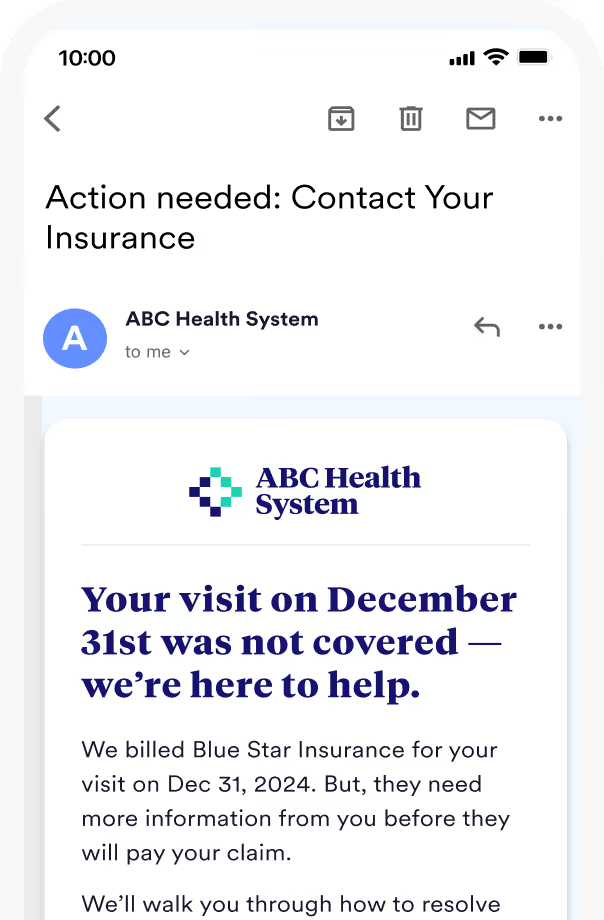
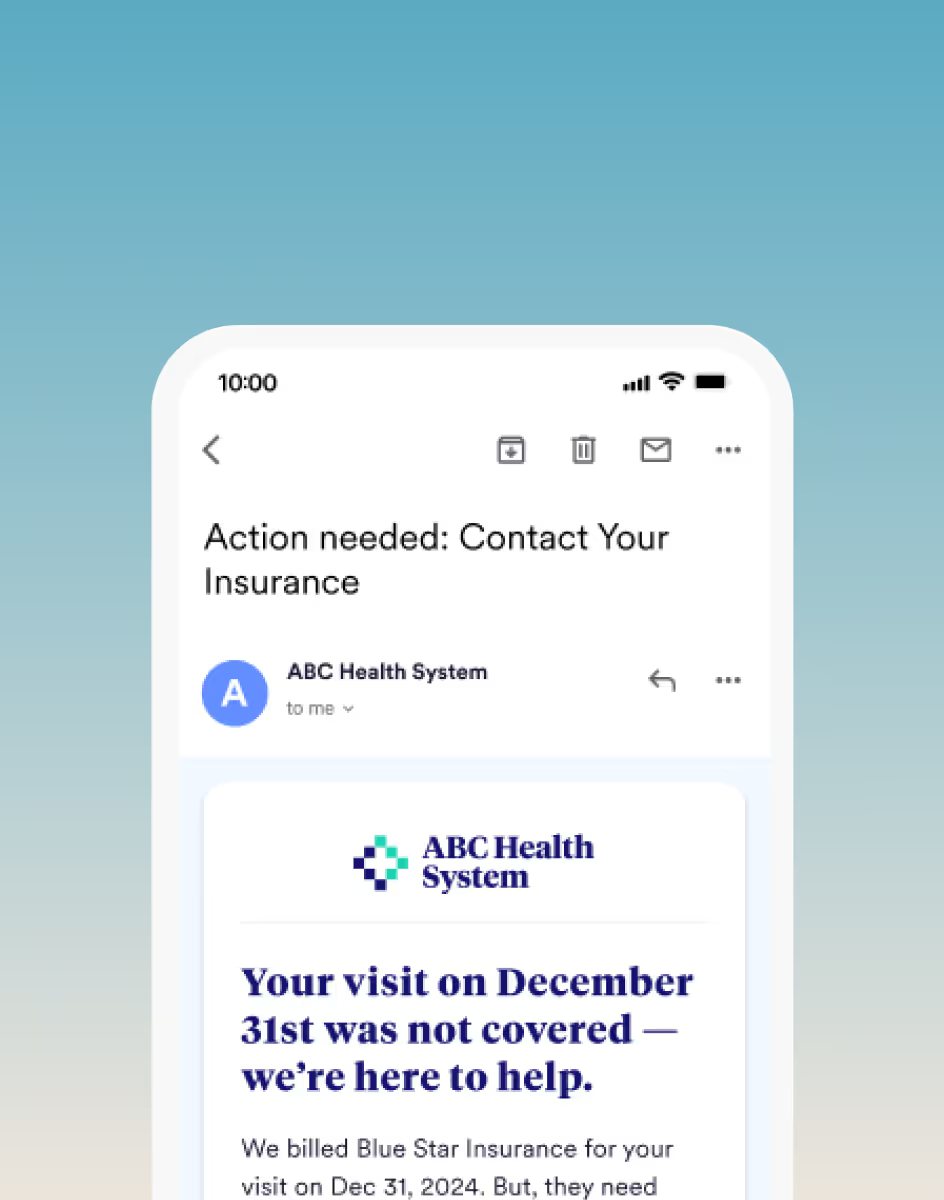
Confusion over why you’re receiving a $287 bill two months after paying a $40 copay at the point of service. Or what “CPT 80053 – Comprehensive Metabolic Panel” means and why insurance denied it. Or why you’re getting separate bills from the doctor, the lab, the facility, and someone called “Anesthesia Service Inc.” (Is this a scam?)
That confusion drives call volume, delays payment, and, most damaging, erodes patient trust. It’s costly for providers and frustrating for patients stuck on hold trying to understand bills that don’t make sense.
AI tools can help: from conversational AI in the call center, to optimizing cost estimation during financial clearance, to systems that catch coverage issues before a bill ever reaches the patient. But poorly designed tools can do the opposite, automating confusion at scale by explaining the wrong thing, too late.
To understand the difference, we turned to someone who’s been building these systems firsthand. Georg Ulrich is an applied AI engineer at Cedar who developed Kora, our AI agent for patient billing support.
Here’s what he’s learned, and what it means for healthcare providers evaluating these tools.
What’s the Cost of a Confusing Billing Experience?
When a consumer is double-charged for an online purchase, worst case: the merchant gets a bad review and maybe loses a customer.
Healthcare billing issues couldn’t be more different. And it’s not just because the bills often feel like a surprise, arriving weeks after a visit.
Cedar’s research shows that when patients don’t understand their bills, they’re three times more likely to delay payment.1 They have questions that clearer communication could have prevented. They dispute charges that are actually correct. Sometimes they just never pay at all.
“While we have very strong online self-service tools for resolving medical billing questions, a lot of people still prefer the phone,” says Ulrich. “This can be expensive for providers. Plus, it consumes valuable time agents could be spending on complex cases.”
Layer in high call center turnover and long onboarding times, and the operational costs add up. But the human costs matter even more.
Confusing bills create stress and anxiety—the last thing people need when recovering from care. In fact, about half of patients say difficulty paying a large bill affected their healing. In some cases, confusion can even keep people from seeking care when they need it most.
If you work in revenue cycle, none of this is new. What’s different now is how and where AI can step in to help.
Where AI Can Step In to Reduce Billing Confusion
AI tools for billing confusion work at different stages of the financial journey, affecting both what patients see (and hear) and how teams work behind the scenes.
Here’s where they’re making the biggest impact:
1. Conversational AI for Billing Support
Voice agents and text-based chatbots handle the most expensive part of billing confusion: customer service.
They authenticate patients, understand free-form questions like “Why is my bill so high?” and synthesize scattered information to resolve issues. They handle lower-complexity questions end-to-end—balance inquiries, payment confirmations—and route thornier ones to humans with full context, reducing handle times and repeat calls.
“In general, the call center space is a strong application of AI,” Ulrich says. “But success depends on having the right data and experience.”
For example: say a patient calls asking why they have a balance when “insurance should have covered this.” It’s not enough to design conversational flows that sound good. The AI needs access to the actual balance, insurance remittance details, and any adjustments that were applied.
“If you don’t have that data foundation,” Ulrich explains, “you don’t have much AI to be building.”
2. Copilots for Call Center Agents
When conversational AI can’t resolve a call, what happens next matters just as much as the escalation itself.
The worst experience: a patient explains their situation to AI, gets transferred, and has to start over with a human agent who knows nothing about the conversation. Our research shows it happens all the time, with 43% of patients reporting they often re-explain their situation when reaching out for help—increasing both cognitive load and frustration.
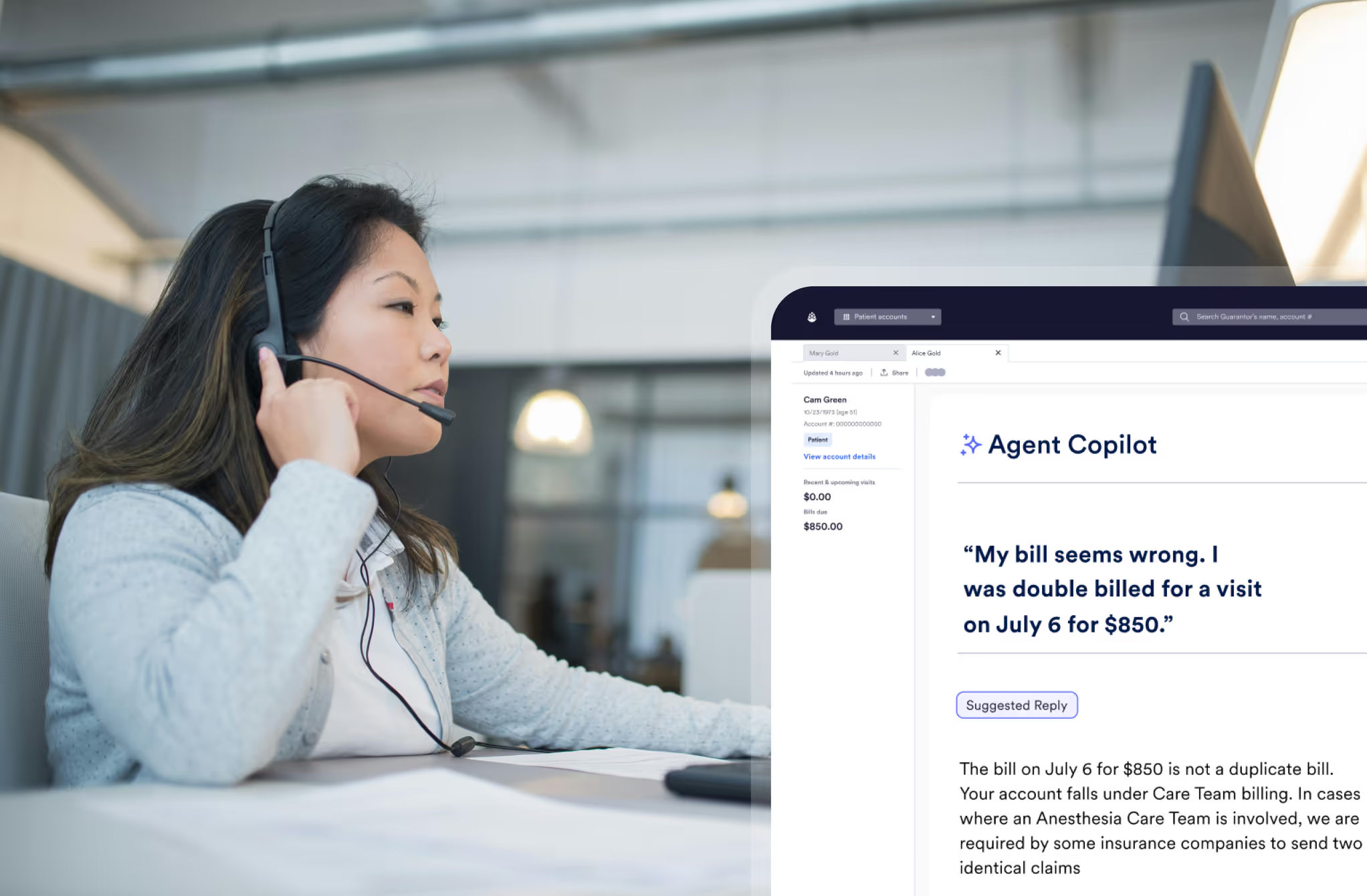
Copilot systems solve this.
“It’s not about automating every call,” Ulrich explains. “It’s much more about automating parts of calls and then handing over to the agent with all the relevant information already prepared.”
That could be authentication plus real-time snapshots of balances, claims, notices, and prior payments. Human agents spend less time fussing with software, more time actually helping patients.
This matters most for complex cases (e.g., disputes, financial hardship, billing errors), where patients have already explained themselves once and shouldn’t have to repeat it.
3. Plain-Language Bill Summaries
If call center AI treats the symptom, bill summaries address the root cause: bills patients can’t understand in the first place.
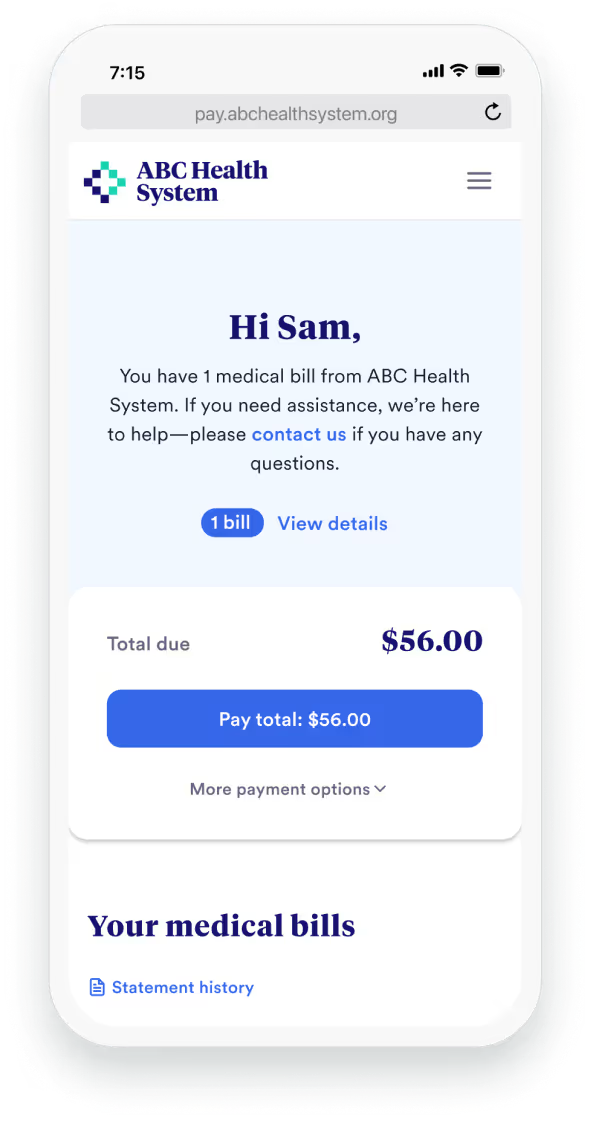
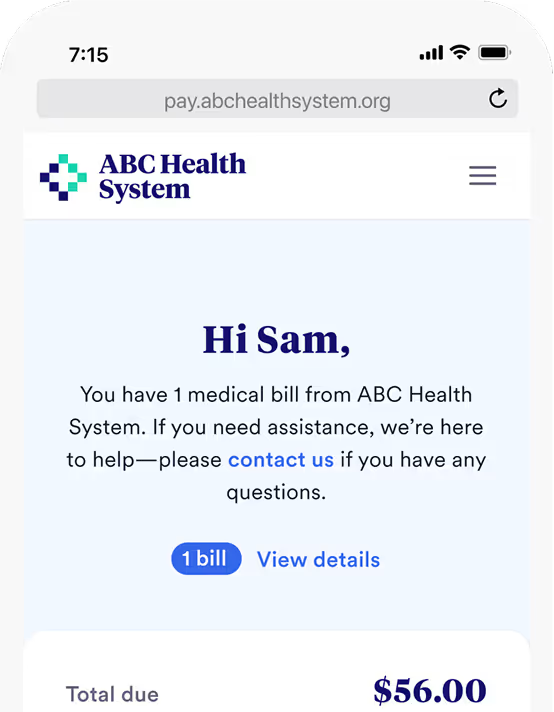
Think Google AI Summaries but for medical bills. Instead of “CPT-99202 – Evaluation and Management – $56” patients see: “You have one bill ready for your office visit at ABC Health System on Dec 27, 2024. Your EOB and bill have been verified by your insurer. Insurance covered $100 of your $156 office visit because you’ve met your deductible for 2024. Your remaining balance is $56.00.”
These summaries can be embedded in digital statements, payment portals, and self-service tools, so common questions are answered before a patient ever picks up the phone.
And like conversational AI, this only works with the right data integration. Generic explanations about deductibles don’t help if the AI can’t show whether this patient’s deductible has been met or how much they’ve paid toward it.
Building an AI-Powered Patient Billing Support Funnel

4. Upstream Prevention in Revenue Cycle Workflows
The tools above address confusion after bills are sent. But several AI approaches work earlier in the process to prevent confusing bills from going out at all.
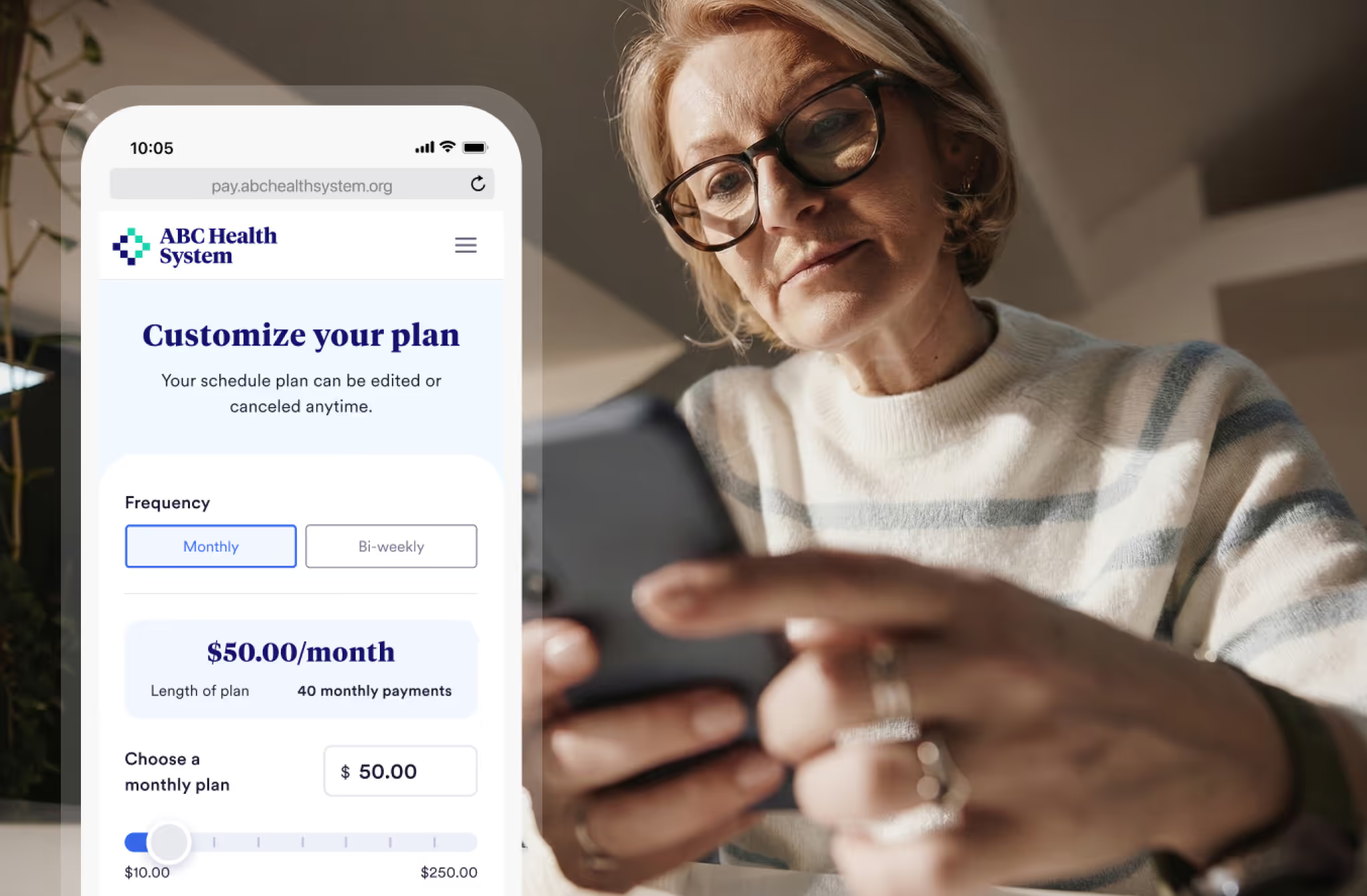
Cost estimation tools generate personalized out-of-pocket estimates before or shortly after care by combining contract logic, benefits data, and historical patterns. They help set clearer expectations about what patients will owe and enable upfront payment collection, reducing downstream accounts receivable work and billing friction.
Revenue cycle optimization platforms autonomously detect and resolve issues before claims are submitted. These systems identify coding errors, eligibility gaps, and coordination of benefits (COB) problems that lead to denials. They learn from denial patterns to refine workflows, flag prior authorization risks, and auto-generate clinical appeals—preventing problematic bills from reaching patients in the first place.
5. Supporting Tools for Operators
Several other AI tools support billing clarity in more specific contexts:
Analytics tools use AI to identify patterns in patient feedback and behavior. A large language model (LLM) can analyze thousands of survey responses to surface confusion hotspots—discovering, for instance, that patients consistently misunderstand “facility fees” or don’t realize multiple bills are connected to the same visit.
Organizations can then prioritize which communication templates, FAQs, or statement formats need the most urgent updates.
Content optimization tools help organizations communicate more clearly across channels. LLM-powered editors can review email campaigns, patient portal messages, and statements to flag jargon, check reading level, and suggest simpler alternatives.
They can also generate variations tailored to different patient cohorts—adjusting tone and messaging based on whether someone is cost-sensitive, convenience-oriented, or needs financial assistance guidance. This ensures clarity without requiring every team member to be an expert in patient-friendly communication.
Bill Clarity in Action: Kora AI Agent
So far, we’ve talked about different ways AI can help reduce billing confusion. The more important question is how those capabilities actually come together in a live billing experience.
Here’s what happens behind the scenes with Kora, our AI agent for patient billing support, and the impact it’s already having:
What Kora Actually Does
Kora is an AI agent with two roles: it automates calls when voice AI can handle them safely, and it acts as a copilot—surfacing information in the human agent’s system—when situations require their judgment.
On the automation side, Kora can:
- Authenticate callers (patient, guarantor, caregivers, payers)
- Gather basic information like phone numbers or insurance details
- Resolve inquiries when it has a reliable match
- Flag and route cases that need human intervention
When acting as a copilot, Kora prepares agents before they join:
- Completes authentication (when appropriate)
- Opens the correct account
- Summarizes why the person is calling
- Highlights relevant context
In a field where every question touches sensitive personal and financial details, that shared handoff between AI and humans is essential. Kora is built to stay in its lane, so human agents can stay in theirs.
Watch a Demo of Kora
The Technical Reality of Building Kora
When Cedar set out to build Kora, the team started with a question: What actually causes confusion when patients call about their bills?
Through embedding engineers directly with a provider partner and analyzing real billing calls, Cedar found that most confusion stems from patients being unable to connect what they see on a bill to what actually happened with their care and insurance.
This led to Cedar’s core design principle: AI can’t reduce confusion without the right data.
“Cedar was in a very good position to solve this problem because of our deep expertise in the patient financial experience, gained from years of building products in this domain,” Ulrich explains. Years of integrations, billing logic, and data pipelines already existed. Kora could answer with specifics, not generalities—this patient’s insurance payment, this claim’s status, this balance’s breakdown.
The second challenge: healthcare billing demands precision, but patients don’t follow scripts. They have follow-up questions. They phrase things differently. They’re anxious.
Cedar’s approach: intensive monitoring combined with flexibility within guardrails. Before any change goes live, Kora practices in simulated environments with AI-generated patients. After changes deploy, engineers review actual calls. Using deterministic metrics, the system tracks which explanations work and flags outliers.
One shift validated the approach: giving Kora more freedom to adapt explanations to each patient’s specific question, as long as it stayed within verified data and safety boundaries.
“We started leaning more into letting the AI phrase answers to suit the patient’s question,” Ulrich recalls. “More patients completed the flow and said, ‘Thank you—that’s all I needed.'”
But that flexibility requires accountability. “In healthcare billing, incorrect information can cause patients to delay care, pay the wrong amount, or miss financial assistance,” Ulrich explains. “We accept slower progress in exchange for correctness.”
The Impact on Costs and Confusion
We measure Kora’s impact based on how many calls it touches and what it accomplishes within those calls:
- 40% of callers complete authentication with Kora. That’s meaningful: authentication is a requirement on most calls, and it’s one of the most repetitive parts of the experience. When AI handles it, patients move faster and agents don’t repeat the same security questions hundreds of times daily.
- 15% of calls are fully resolved by Kora without human involvement. These situations include addressing balance questions, explaining charges, and updating insurance information. Kora provides helpful, empathetic answers and patients move on.
- The result: up to 25% reduction in live-agent handle time—a material efficiency gain for revenue cycle operations handling thousands of patient interactions monthly. Agents start calls with authentication done, the correct account open, and a summary of what the patient needs. Less time on logistics means more time actually solving problems.
The impact extends beyond efficiency.
Patients resolve billing questions in minutes instead of days through self-service tools. Agents spend their time on cases where human judgment actually matters. And providers reduce costs while improving the one interaction patients remember most clearly: the bill.
Common Questions We Get About AI for Patient Billing
Many organizations are already experimenting with AI in revenue cycle management. But when something touches the patient experience and could affect trust, it’s reasonable to pause and ask hard questions before going further.
Here’s what we hear most often:
Can AI help patients understand their medical bills?
Yes, when it is designed to explain bills in plain language and grounded in billing and coverage data. AI can translate line items, insurance adjustments, and patient responsibility into explanations that make sense to individuals with lower healthcare financial literacy, answer follow-up questions in real time, and surface relevant context like prior payments or benefits. The result is fewer surprises, fewer questions, and greater confidence in what patients owe and why.
How does AI impact patient trust in billing?
When AI has access to the right data and is embedded directly into the billing experience, it can actually increase trust. Patients get clearer explanations and faster resolution without repeating themselves or escalating to an agent. And when questions do require human support, AI helps route and prepare those interactions more effectively.
How can conversational AI support billing?
Conversational AI acts as a first line of support for patient billing across voice and chat, handling common questions around balances, insurance, and payments while guiding patients to the right action. It reduces unnecessary calls, shortens handle times when escalation is needed, and ensures agents spend their time on complex or sensitive cases instead of repeat explanations.
Will AI replace human billing teams?
AI reduces the need for humans to handle lower-complexity calls but doesn’t eliminate the need for human judgment. Complex disputes, financial hardship situations, and emotionally charged calls still require human empathy and decision-making authority. The role of billing teams evolves rather than disappears, focusing on cases where human expertise adds the most value to the patient financial experience.
How do we ensure AI doesn’t give patients incorrect information?
Accuracy depends less on the model and more on the system around it. Effective AI is tightly constrained to verified data sources, applies deterministic business rules, and operates within clear guardrails that limit what it can say or do. Continuous monitoring, testing with real and simulated scenarios, and clear escalation paths to human agents are essential. In healthcare billing, trust is earned by prioritizing accuracy/correctness over speed or novelty.
Where should providers start with AI for billing confusion?
Start by identifying where patients get confused most often and where that confusion is most costly for your revenue cycle operations. For some organizations, that’s inbound billing calls. For others, it’s unclear statements, inaccurate estimates, or preventable denials that surface weeks later as disputes. The best starting point is a narrow, well-defined problem with strong data behind it, where AI can reduce confusion without introducing risk. From there, capabilities can expand across the financial journey.
Can providers build AI for patient billing themselves?
Some organizations choose to build AI internally, but it’s important to understand the scope. Effective AI requires ongoing investment beyond initial development, including continuous monitoring, refinement, and adaptation as AI technology evolves. Just as important, performance depends on deep access to accurate billing, coverage, and payment data. Without that foundation, even well-designed AI can fall back on generic explanations that don’t actually resolve patient questions.
The challenge isn’t building an AI model, it’s sustaining the data, infrastructure, and expertise needed to make it work reliably at scale.
What is the ROI of using AI to reduce patient billing?
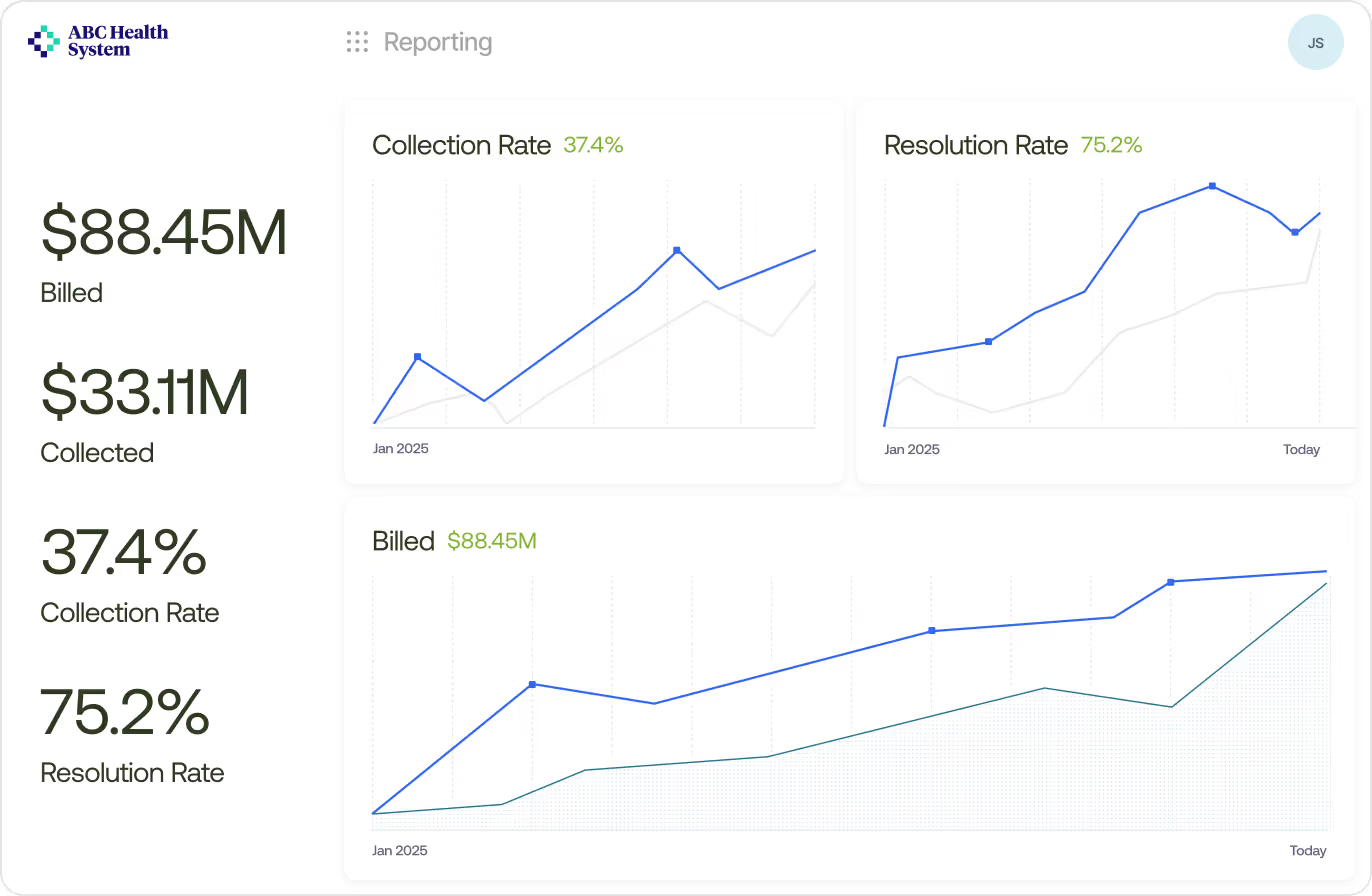
It depends on the problem the AI is designed to solve. But improved bill comprehension and faster issue resolution can lower call center volumes and handle time, while helping patients feel confident enough to pay rather than delay or dispute charges. The combined effect is lower revenue cycle operational costs, higher collection rates and a better patient financial experience without adding pressure to patients or staff.
Patients Are Ready for AI—Are You?
Patients are already using AI to clear up billing confusion.
Our research shows that over half of patients now use AI tools to interpret medical bills (51%) and AI assistants to help resolve them (55%).
When patients turn to ChatGPT to explain an EOB instead of asking you, that’s a missed opportunity to guide them toward payment, financial assistance, or coverage appeals. Worse, those tools often give confident but incorrect answers about your specific policies, creating more confusion and sending frustrated patients back to your call center.
“With AI, you can develop a lot very quickly if you accept the risk of having errors occur,” Ulrich says. “We’re not comfortable doing this. We’ve made steady progress while ensuring safety and monitoring at every step.”
In healthcare billing, accuracy earns trust. And trust is the most valuable currency a provider has.
Evaluating conversational AI for your call center? We analyzed over 20,000 real billing calls to understand what makes AI voice agents effective—and where solutions fall short.
Download: What It Really Takes for AI to Handle Patient Billing Calls →
- Cedar (2025). Based on a survey of 4,003 consumers across 34 states on their attitudes and experiences with the healthcare financial experience in the U.S. ↩︎